

Accumulation is storing product for processes down the line.
Two accumulation conveyance methods are available. Choose the right accumulation method based on your products and how much contact they can tolerate.
Zero Pressure Accumulation (ZPA):
When your products demand the highest level of care, Zero Pressure Accumulation is the solution. ZPA conveyors are designed to completely eliminate contact between items during accumulation, protecting delicate goods from scratches, dents, or other damage. Using advanced sensors and precise zone controls, products queue seamlessly without ever touching. The result is gentler handling, consistent product flow, and higher throughput—making ZPA an essential choice for industries where quality and safety can’t be compromised.
Low Pressure Accumulation:
For products that can tolerate slight contact but still need careful handling, low pressure accumulation strikes the perfect balance. These conveyors apply just enough force to keep items moving while minimizing the risk of damage. The gentle flow reduces stress on fragile products while maintaining steady line efficiency. By controlling product spacing and preventing bottlenecks, low pressure systems keep operations running smoothly—ideal for applications where a softer touch still delivers big results.
Smart Product Flow for Smooth, Damage-Free Operations
Our accumulation conveyor systems are built to keep your products moving safely, smoothly, and efficiently. When precision handling is critical, our conveyors deliver unmatched control over product flow and orientation. Engineered to prevent jams, damage, and downtime, they create seamless transitions between processes. Whether you’re buffering, sorting, or staging, our accumulation solutions give you the reliability, flexibility, and control to keep production running at peak performance.
Accumulation Solutions Across Industries
- Food Packaging Lines: Prevent fragile or irregularly shaped items from colliding during accumulation.
- Automotive and Electronics Assembly: Separate and stage components for robotic pick-and-place systems.
- Pharmaceutical and Medical Device Handling: Ensure precise product flow for inspection, counting, or packaging.
- E-commerce and Fulfillment Centers: Buffer and release packages to match downstream processing speeds.
Why Choose Our Accumulation Conveyors?
- Custom Configurations: Tailored to your product size, weight, and handling needs, our conveyors handle a wide range of items—from delicate packages to heavy loads.
- Modularity: Our automated conveyor solutions are built to adapt to your ever-changing needs. With modular components, you can easily reconfigure your conveyor system to accommodate new products, processes, or layouts. This flexibility allows you to scale your operations without the need for costly and time-consuming overhauls.
- Gentle Product Handling: Prevent product collisions and damage with zero-pressure and light-pressure accumulation options.
- Smart Flow Control: Use lift pins and separation mechanisms to manage product spacing and orientation with precision.
- Versatile Integration: Easily add to existing lines to improve throughput, reduce bottlenecks, and enhance automation.
Let’s Optimize Your Product Flow
Whether you’re looking to reduce downtime, increase throughput, improve product handling, or increase line efficiency, our accumulation conveyors are engineered to deliver. Contact us today to design a system tailored to your operation.
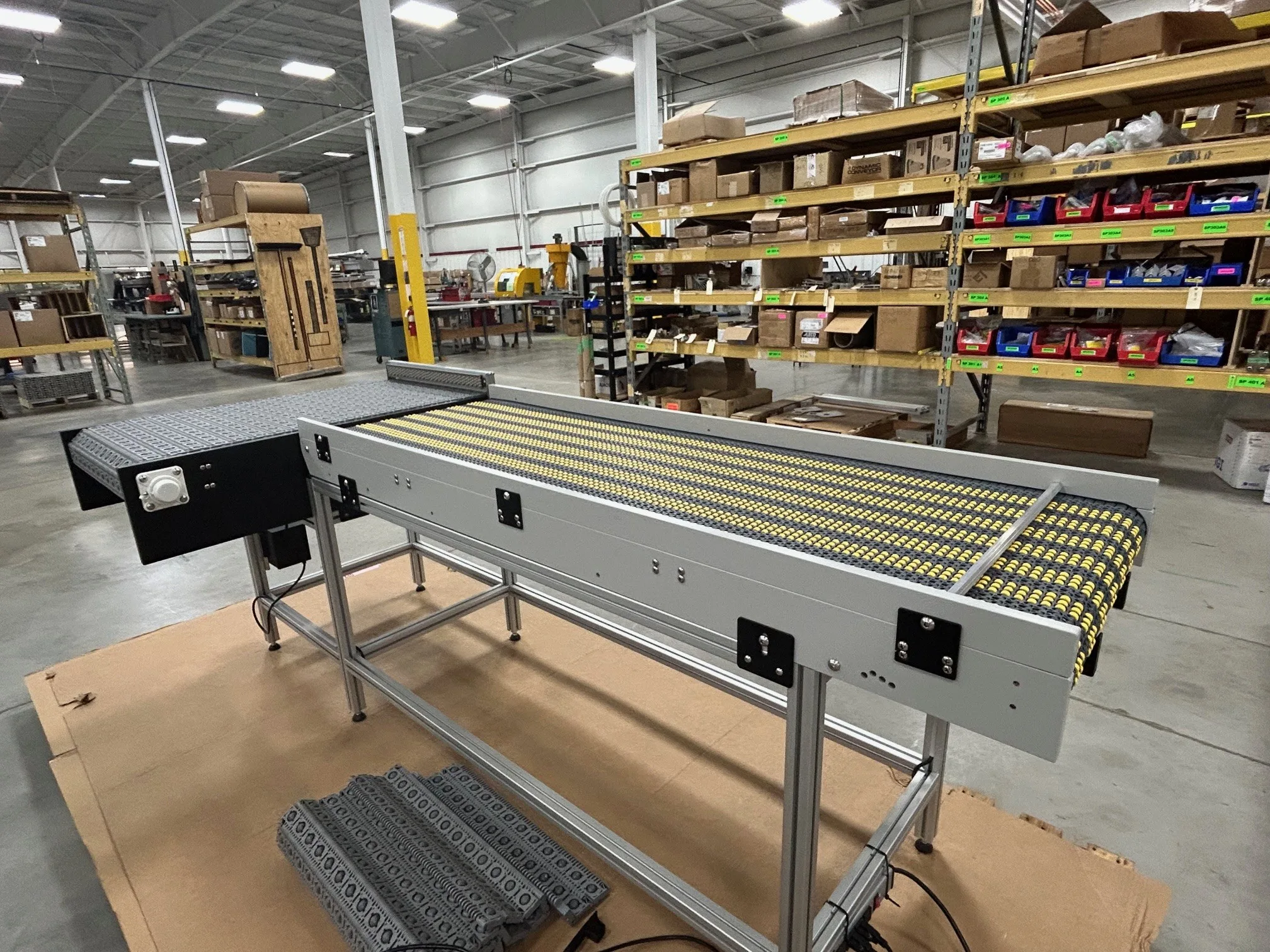
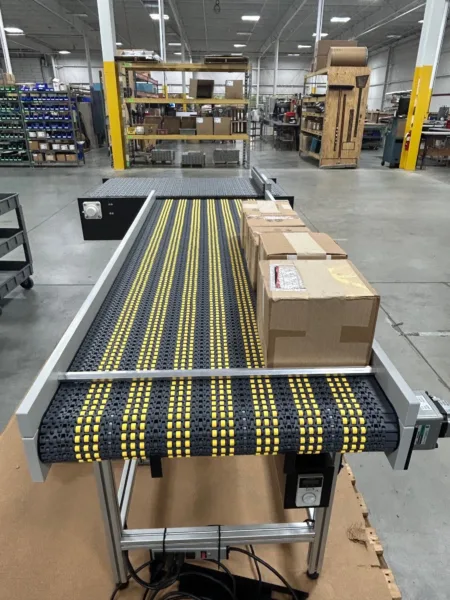
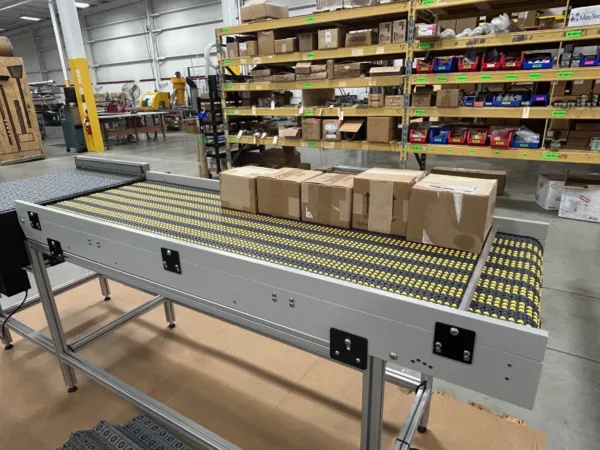
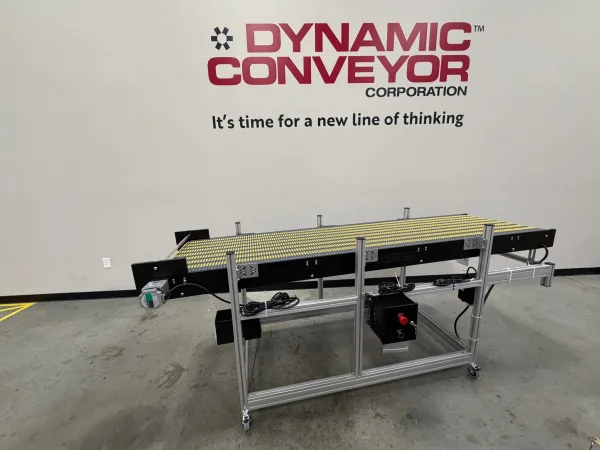
Watch these videos to see more of our accumulating conveyor solutions in action.
Solutions


Accumulation Conveyor FAQs
How do accumulation conveyors improve throughput when upstream and downstream speeds don’t match?
Accumulation conveyors act as a buffer between processes that run at different speeds. When downstream equipment slows or pauses, accumulation zones temporarily hold products without stopping the entire line.
When downstream flow resumes, the conveyor releases items in a controlled sequence. This prevents bottlenecks, reduces idle time, and keeps overall throughput more consistent across the production line.
What customization options are available for accumulation zones, sensors, and control logic?
Accumulation systems can be tailored with custom zone lengths, photo‑eye or proximity sensors, adjustable speed controls, and PLC‑ready logic. Dynamic’s modular conveyor design allows zones to be added, removed, or reconfigured as production needs change.
Controls can also be integrated with existing automation systems for advanced logic, such as priority release, slug release, or product‑specific spacing.
How does an accumulation conveyor impact overall equipment efficiency (OEE)?
Accumulation conveyors improve OEE by reducing unplanned stops, minimizing micro‑stoppages, and keeping upstream equipment running even when downstream processes slow.
By maintaining consistent product flow, they help stabilize cycle times and reduce downtime events — two key components of OEE. The result is higher line availability and more predictable performance.
What is the main trade-off when choosing an accumulation method?
The main trade-off is usually between product protection and control on one side, versus simplicity and cost on the other. Zero-pressure systems offer the most control, while gravity and simple low-pressure systems usually reduce cost and complexity but accept more contact and less precise behavior.
What maintenance requirements or predictive maintenance features apply to accumulation conveyors?
Accumulation conveyors require minimal routine maintenance. Modular components allow quick belt changes, easy access to wear parts, and simplified cleaning.
Sensors and zone controls can be monitored for performance trends, enabling predictive maintenance practices such as early detection of misalignment, sensor failure, or motor load changes. This reduces downtime and extends equipment life.
How do accumulation conveyors support product traceability or quality control systems?
Accumulation zones create controlled spacing between products, which is ideal for barcode scanning, vision inspection, weighing, metal detection, or labeling.
The conveyor can be integrated with traceability software or QC equipment so each product is inspected or recorded as it moves through the line. Consistent spacing improves accuracy and reduces the risk of missed reads or inspection errors.
Can roller-top belting be used for accumulation?
Yes. Roller-top belting is specifically used for low-back-pressure accumulation on continuous-running lines because the rollers in the belt surface reduce drag under accumulated products. However, it is generally not the same as true zero-pressure zone accumulation because products may still touch.
How does zero-pressure zone accumulation release product?
The discharge zone runs when downstream space is available, and once that zone clears, the next upstream zone is allowed to advance its product. This creates a controlled, sequential release pattern rather than a full-line push from upstream.
How does gravity conveyor accumulation control back pressure?
Basic gravity accumulation controls back pressure mainly with slope, roller friction, and physical stops. More advanced gravity systems add brakes or zone control to segment the load and prevent excessive force build-up on long declines.
What products are a poor fit for gravity accumulation?
Products that are fragile, unstable, very light, variable or not flat bottom surface, or easily damaged by contact are usually poor candidates for simple gravity accumulation. These applications often need powered low-pressure or zero-pressure designs instead.
When is a hopper accumulation system better than a standard accumulation conveyor?
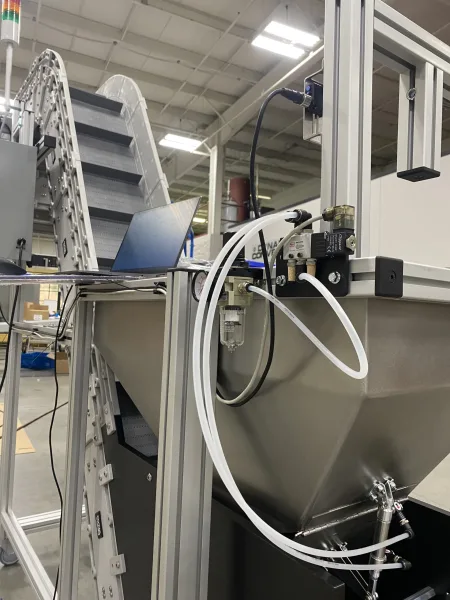
A hopper system is better when parts are loose, bulk, or randomly oriented and the objective is temporary storage plus metered discharge. Standard unit-load accumulation conveyors are better when individual cartons, totes, or pallets must be buffered while maintaining orientation and controlled release.
Does zero-pressure accumulation always mean one product per zone?
In most standard ZPA designs, yes: the control concept assumes each zone holds one product position to maintain separation and prevent contact. Special cases can be engineered differently, but zone length is normally matched to product length for that reason.
What is the difference between zero-pressure and low-pressure accumulation?
Zero-pressure accumulation keeps products from touching by stopping them in individual zones until downstream space is available. Low-pressure accumulation allows light product contact but limits the force transmitted through the accumulated line.