

Also posted on December 23, 2035 as a White Paper on Material Handling Wholesaler Magazine.
How Modular Conveyor Systems Support Agile Production in Plastics Applications
In a manufacturing environment defined by frequent change, operational flexibility is now a competitive necessity. Product lines shift frequently, facility layouts change, and customer demands can pivot overnight. For operations leaders, one of the most essential components of flexibility is the conveyor system. Once viewed as a static component of plant infrastructure, conveyors have evolved into highly configurable tools that can support rapid change, streamline processes, and drive long-term cost savings.
This shift is being driven by the rise of modular conveyor systems—customizable, reconfigurable platforms that adapt alongside production needs. Unlike traditional fixed systems that require substantial effort to modify, modular conveyors are designed to change with minimal downtime, labor, or capital expense.
The Flexibility Imperative
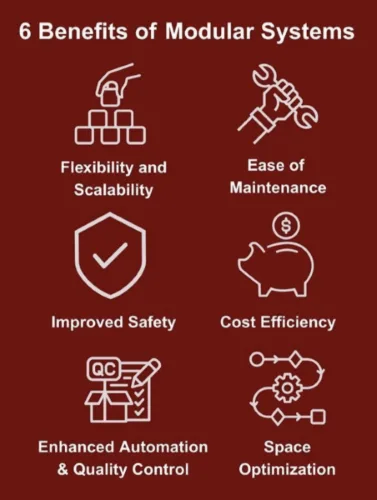 Traditional conveyor systems, while robust, often lack the adaptability necessary for modern manufacturing in plastics applications. In the past, introducing new product lines or adjusting production cells typically meant costly and disruptive overhauls. Modular conveyor systems solve these problems by enabling users to easily add, remove, or rearrange components.
Labor challenges underscore the need for flexibility. With labor costs rising and high turnover, manufacturers need systems that reduce manual labor and simplify training. Modular conveyors minimize downtime through quick reconfigurations and automate product handling.
Additionally, modular conveyors can be precisely tailored to product specifications. For example, a production line initially designed with flat conveyors can integrate incline modules to maximize space utilization or adapt to new equipment configurations. It is helpful to think of these modular systems as “building blocks,” allowing manufacturers to adapt their infrastructure without a major overhaul incrementally, improving manufacturing efficiency and reducing waste.
Maintenance, Cost, and Safety Benefits
A key advantage of modular systems is their low maintenance components. Components are typically off-the-shelf, enabling rapid replacement and minimal downtime. Parts standardization significantly reduces maintenance and inventory costs, and manufacturers benefit from volume pricing and straightforward spare parts management, enhancing the overall cost-effectiveness of these systems.
Equally important, modular systems deliver significant safety benefits. Modular conveyor systems inherently reduce ergonomic risks by automating tasks traditionally performed manually. Modular systems mitigate pinch points while protective covers, hoppers, and modular safety accessories minimize injury risks. Conveyor systems can be made to comply with the specifications of OSHA, UL, and NFPA, ensuring the equipment meets local regulatory requirements and your company’s production needs.
Supporting Smarter Automation
As automation expands across industries, modular conveyors have become essential for flexible, future-ready production lines in the plastics industry. Their value lies in both their ability to adapt quickly to new processes and the range of accessories that enable seamless integration with automated systems.
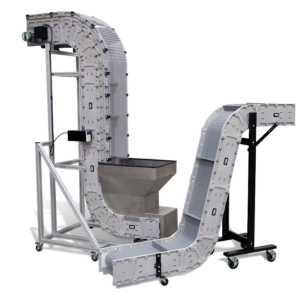 Modular conveyors with plug-and-play controls and accessories, such as metal detectors, hoppers, chutes, ionizers, and reject arms, can be easily configured for new products or regulatory needs. For example, hoppers and chutes help plastics manufacturers contain and guide molded parts or products, minimizing scrap and ensuring controlled flow during handling and packaging, while metal detectors in plastic lines prevent contaminants from damaging downstream equipment. Belt options like anti-static or easy-release surfaces allow facilities to handle diverse products and fit conveyors into tight areas with changing production layouts.
These accessories address real operational challenges. Additional automation accessories such as integrating sensors and vision systems enables automated quality checks, such as counting, leak detection, or short-shot detection, supporting one-piece flow and reducing defects.
By enabling quick adaptation, whether adding a cooling fan, swapping a belt, or installing a diverting arm, modular conveyors help operators maintain productivity and meet KPIs. Seamless integration with automation also supports real-time data flow, predictive maintenance, and Corporate & regulatory compliance needs.
With the right accessories, a conveyor becomes more than a transport tool-it’s a dynamic platform that helps manufacturers optimize efficiency, quality, and safety as their operations evolve.
ROI Considerations
Though modular conveyors may cost more upfront than fixed systems, their long-term value is greater, especially for companies with uncertain or seasonal demand. Manufacturers can build in phases, scaling systems as needs grow, which spreads out capital costs through fiscal cycles and allows for more accurate planning, risk mitigation, and adaptability.
From an engineering perspective, modular systems, like those designed by Dynamic Conveyor, an industry leader in conveyor technology, are built on standardized, interchangeable modules. This allows engineers to quickly reconfigure layouts, add incline or decline sections, or adapt to new equipment heights by simply inserting or removing specific modules without the need for custom fabrication or extended downtime. For example, if a production process changes from handling flat items to taller products, engineers can swap in taller flights or switch to a different belt surface to maintain throughput and product integrity.
Scalability is particularly valuable for operations navigating fluctuating order volumes or evolving workflows. A facility can quickly add modules to accommodate peak season demand, or reconfigure existing lines to support new products-without the disruption and expense of a complete system overhaul or replacement. This flexibility ensures that conveyor investments remain aligned with actual business needs, reducing the risk of over- or underspending on automation infrastructure.
Maintenance costs also tend to be lower with modular systems. Standardized, off-the-shelf components can be quickly replaced, minimizing downtime and simplifying spare parts management. Many modular designs are engineered for tool-less maintenance, allowing plant staff to perform repairs or adjustments without specialized training or lengthy shutdowns. For engineers and maintenance teams, this means less time troubleshooting and more time focused on optimizing production.
Energy efficiency further enhances long-term ROI. Modern modular conveyors often feature variable-speed drives and high-efficiency motors, which help reduce energy consumption and operating costs over the system’s lifecycle. And because modular systems can be reconfigured or expanded without replacing the entire line, the total cost of ownership remains lower, even as production requirements change.
For manufacturers evaluating these investments, seeking companies with decades of experience offers a useful benchmark. For more than 30 years, Dynamic Conveyor has helped companies in sectors from plastics to food processing realize rapid ROI by scaling systems as their needs evolve. In one case, a global packaging company saved approximately $50,000 by reconfiguring existing Dynamic Conveyor modules to accommodate new product sizes, eliminating the need for a new system purchase. Other clients have reported payback periods as short as 12 months, citing labor savings, reduced downtime, and the ability to adapt quickly to market shifts as key drivers of value.
For businesses looking to optimize capital allocation and future-proof their operations, modular conveyor systems offer a compelling blend of cost-effectiveness, operational agility, and sustainable value. When exploring how to justify ROI for a new or expanded conveyor system, engaging with an experienced provider early in the process can help identify the most strategic path forward.
Plastics Manufacturing: Accelerating Efficiency and Flexibility with Modular Conveyors
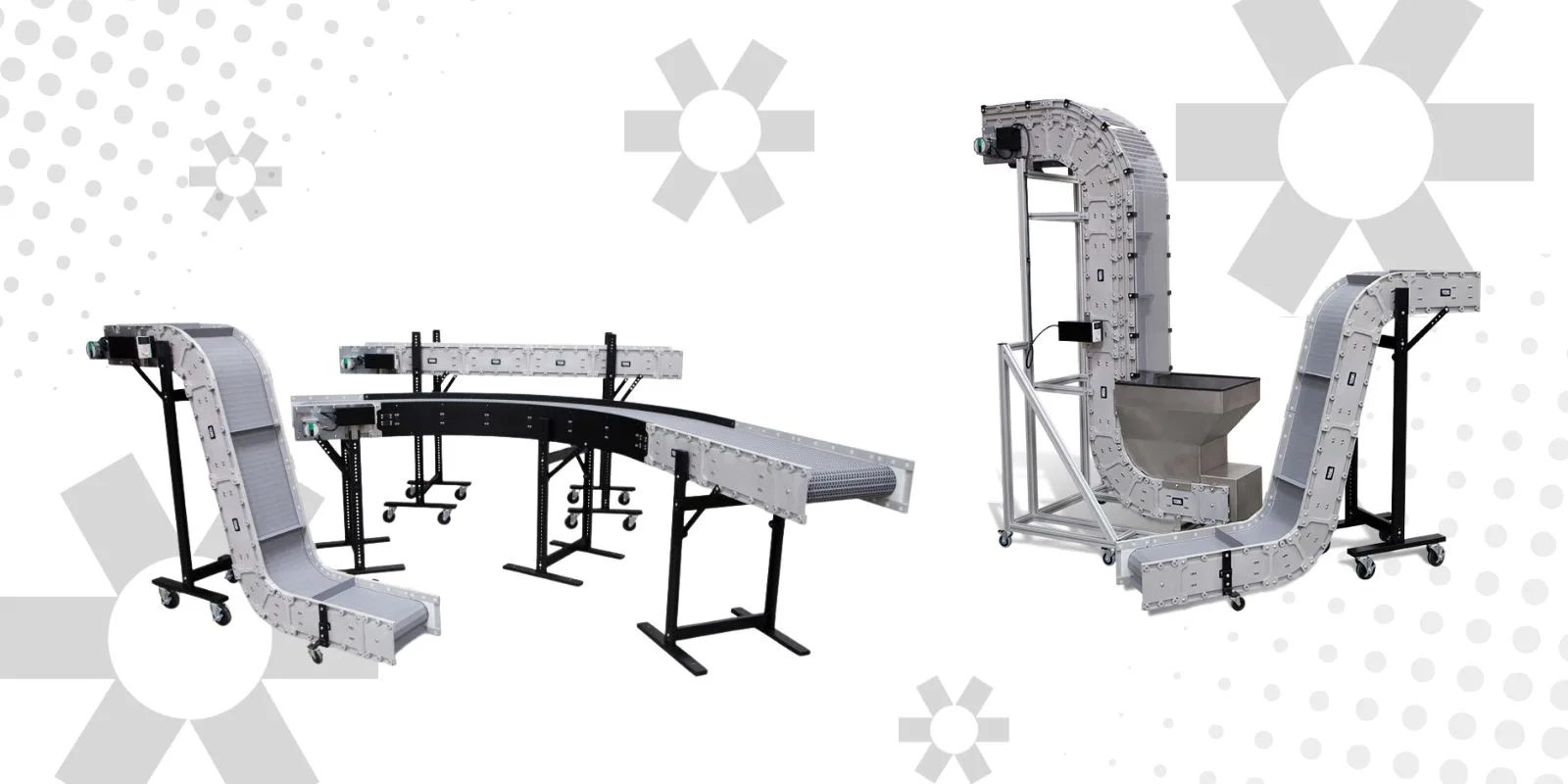
From consumer goods and packaging to medical devices, plastics manufacturing covers an incredibly diverse range of products and applications. Producers in this industry rely on conveyor systems that can adapt to rapid shifts in product specifications and part dimensions. Dynamic Conveyor’s modular DynaCon systems are engineered for maximum flexibility, allowing plastics facilities to reconfigure layouts, add new modules, or integrate automation without costly downtime or custom fabrication. The company also offers the DynaPro, a durable, low-profile flat conveyor specifically designed for reliable material handling in plastics manufacturing. It excels at moving parts from an injection molding machine to the next cell and supports efficient robotic pick-and-place applications. These conveyor solutions empower manufacturers to optimize process flow and maximize efficiency across a range of production needs.
Among the many types of plastic products, bottles and caps present especially demanding production requirements: high-speed blow molding, precise trimming, and careful accumulation to avoid damage and defects. Dynamic Conveyor’s DynaCon modular belt system is purpose-built to address these needs. For example, Currier Plastics implemented paired DynaCon angle conveyors, one for removing moils and tails from molding machines and another to feed scrap materials into a grinder, with inline metal detection to protect downstream equipment. This innovative solution led to the near-elimination of conveyor downtime, automated scrap handling, and improved throughput and quality.
DynaCon conveyors feature enclosed belts, low-maintenance components, and configurable accessories for safety, enabling quick adaptation for new product lines and ensuring manufacturers can scale, maintain compliance, and respond confidently to marketplace changes.
The Road Ahead: Enabling the Next Generation of Manufacturing Agility
As manufacturing continues its rapid evolution, the demand for greater flexibility, efficiency, and resilience is only accelerating. The convergence of automation, digitalization, and data-driven decision-making is reshaping how factories operate and compete. Modular conveyor systems are poised to play a pivotal role in this transformation, serving as the backbone of agile production environments that can adapt to shifting markets, emerging technologies, and evolving regulatory landscapes.
The next wave of innovation will see conveyors move beyond their traditional role as material movers. IoT-enabled controls, real-time performance monitoring, and seamless integration with robotics and smart factory systems will empower manufacturers to optimize processes, anticipate maintenance needs, and respond instantly to new opportunities or disruptions. As artificial intelligence and advanced analytics become more accessible, conveyors will increasingly provide actionable insights-helping teams improve quality, reduce waste, and maximize throughput.
For operations leaders, the priority is clear: invest in infrastructure that is not only robust and reliable, but also inherently adaptable. Modular systems, especially those designed for easy reconfiguration, integration, and compliance, offer a strategic advantage that extends far beyond initial cost savings. They enable companies to scale, pivot, and innovate without the friction and downtime of traditional fixed systems.
Providers with a proven track record in modular technology and engineering support, such as Dynamic Conveyor, are helping manufacturers across industries realize these benefits in real-world applications. By leveraging modularity, automation, and data integration, organizations can build production environments that are ready for whatever comes next-whether it’s a new product launch, a regulatory shift, or the next leap in smart manufacturing.
In this new era, the manufacturers who thrive will be those who prioritize adaptability and continuous improvement. Modular conveyor systems are more than a response to today’s challenges – they are a foundation for tomorrow’s opportunities.

- Flexibility in Manufacturing - March 18, 2026
- Dynamic Conveyor Corporation Celebrates 35 Years of Innovative Conveyance Solutions - March 17, 2026
- Draft Day at NPE 2027 – Dynamic Conveyor Secures Its Booth for the Big Show - March 10, 2026