

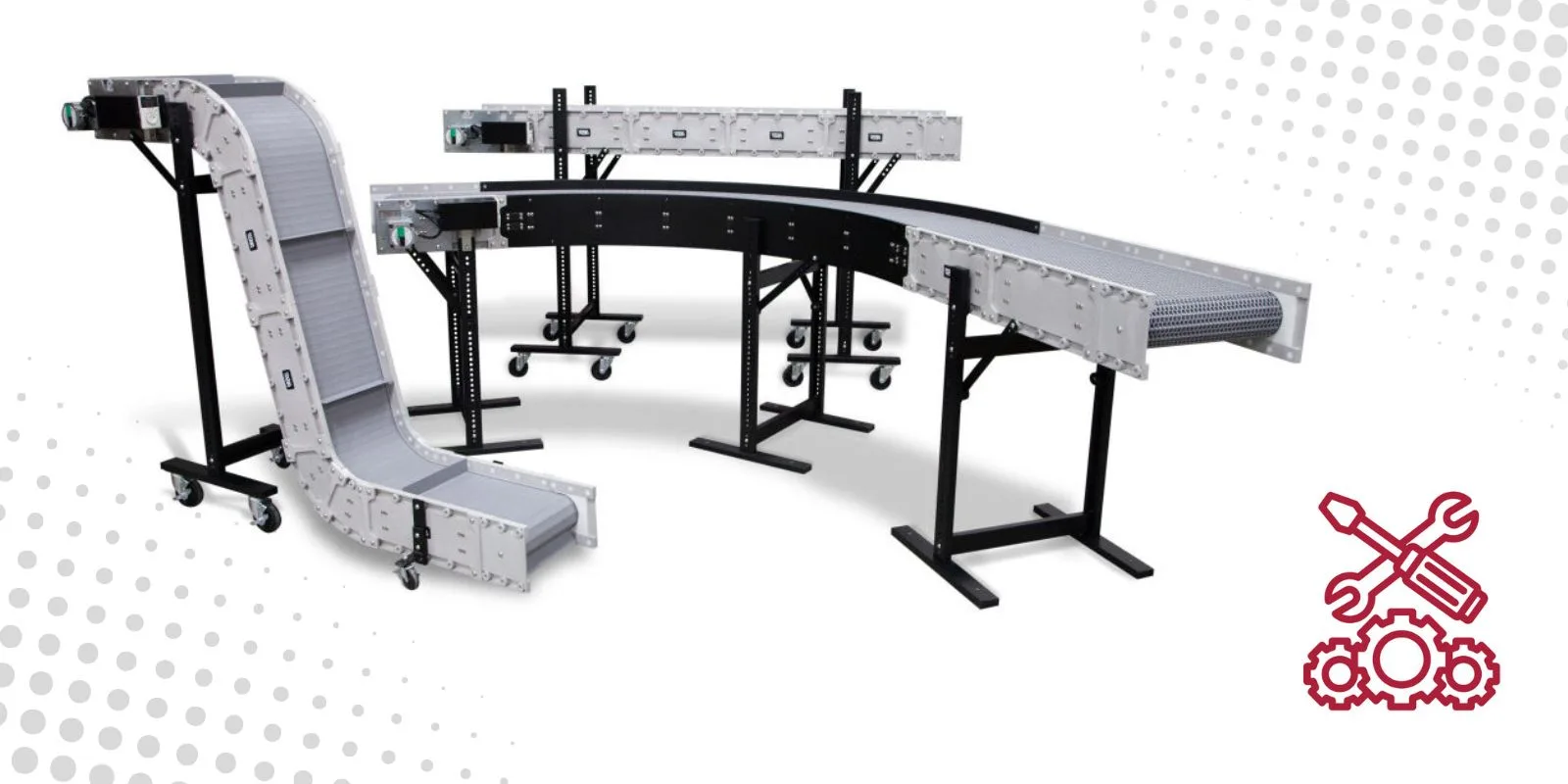
Conveyor efficiency can make or break your bottom line. Downtime, energy waste, and inflexible systems cost manufacturers thousands in lost productivity. Today’s manufacturing environment demands conveyors that do more than move products—they must support automation, sustainability, and adaptability.
Here are five critical factors to consider when optimizing conveyor efficiency:
1. Eliminate Belt Misalignment with Advanced Designs
Traditional PVC conveyor belt maintenance requires frequent alignment and costly replacements—often every 18 months. Misalignment leads to downtime and conveyor maintenance headaches.
Solution:
Unlike traditional belted conveyors, Dynamic Conveyor’s tensionless, self-tracking belts provide superior traction and wear performance without constant tensioning. This design minimizes maintenance and maximizes uptime, ensuring your conveyor is the solution—not the problem.
2. Choose Energy-Efficient Motors
Energy consumption is a hidden cost in many conveyor systems. Standard conveyors often use oversized motors, wasting power and increasing carbon emissions.
Upgrade to High-Efficiency Motors:
- DC Brushless Motors: Reduce power consumption by up to 30%, operate cooler, and extend motor life.
- Servo Motors: Deliver precision and speed for automation-heavy environments.
Choosing the right motor directly impacts energy use, equipment lifespan, and overall conveyor performance, helping you reduce operational costs and meet sustainability goals.
3. Embrace Modular Conveyor Systems
Retrofitting traditional conveyors for new processes is expensive and time-consuming. Modular conveyors solve this problem.
Why Modular Matters:
- Reconfigurable: Add angles, change lengths, or integrate accessories without welding or custom fabrication.
- Cost-Effective: Reduce waste and avoid buying entirely new systems when layouts change.
Dynamic Conveyor’s DynaCon® modular conveyors are designed for flexibility, enabling quick adjustments to meet evolving production needs.
4. Integrate Smart Automation Features
Modern manufacturing demands automation-ready conveyors. Features like photo-eye sensors, metal detection, and leak detection systems improve product quality and reduce labor costs.
Benefits of Automation Integration:
- Real-time defect detection
- Reduced manual handling
- Increased throughput and safety
Dynamic Conveyor’s systems integrate seamlessly with robotics and AI-driven monitoring of moving parts and other components for predictive maintenance and efficiency.
5. Prioritize Sustainability
Manufacturers face rising material costs and stricter environmental standards. Sustainable conveyors help reduce your carbon footprint and operating costs.
Sustainability Strategies:
- Use durable materials like HDPE and stainless steel for long life cycles
- Opt for energy-efficient motors and variable speed drives.
- Choose modular designs to minimize waste and extend equipment life.
Dynamic Conveyor’s commitment to sustainability ensures your systems deliver long-term value while supporting sustainability initiatives.
Looking Ahead: The Future of Conveyor Efficiency
As smart factories and “lights-out” operations become the norm, conveyors must evolve. Modular, automation-ready systems with predictive maintenance capabilities are no longer optional—they’re essential for staying competitive.
Ready to Optimize Your Conveyor Efficiency?
Contact Dynamic Conveyor for a free consultation or download our Conveyor Efficiency Checklist to start improving your operations today.

- DynaCon: The Modular Conveyor Line That Started It All - September 15, 2026
- Inside Sales Representative - September 14, 2026
- Regional Account Manager - September 14, 2026