

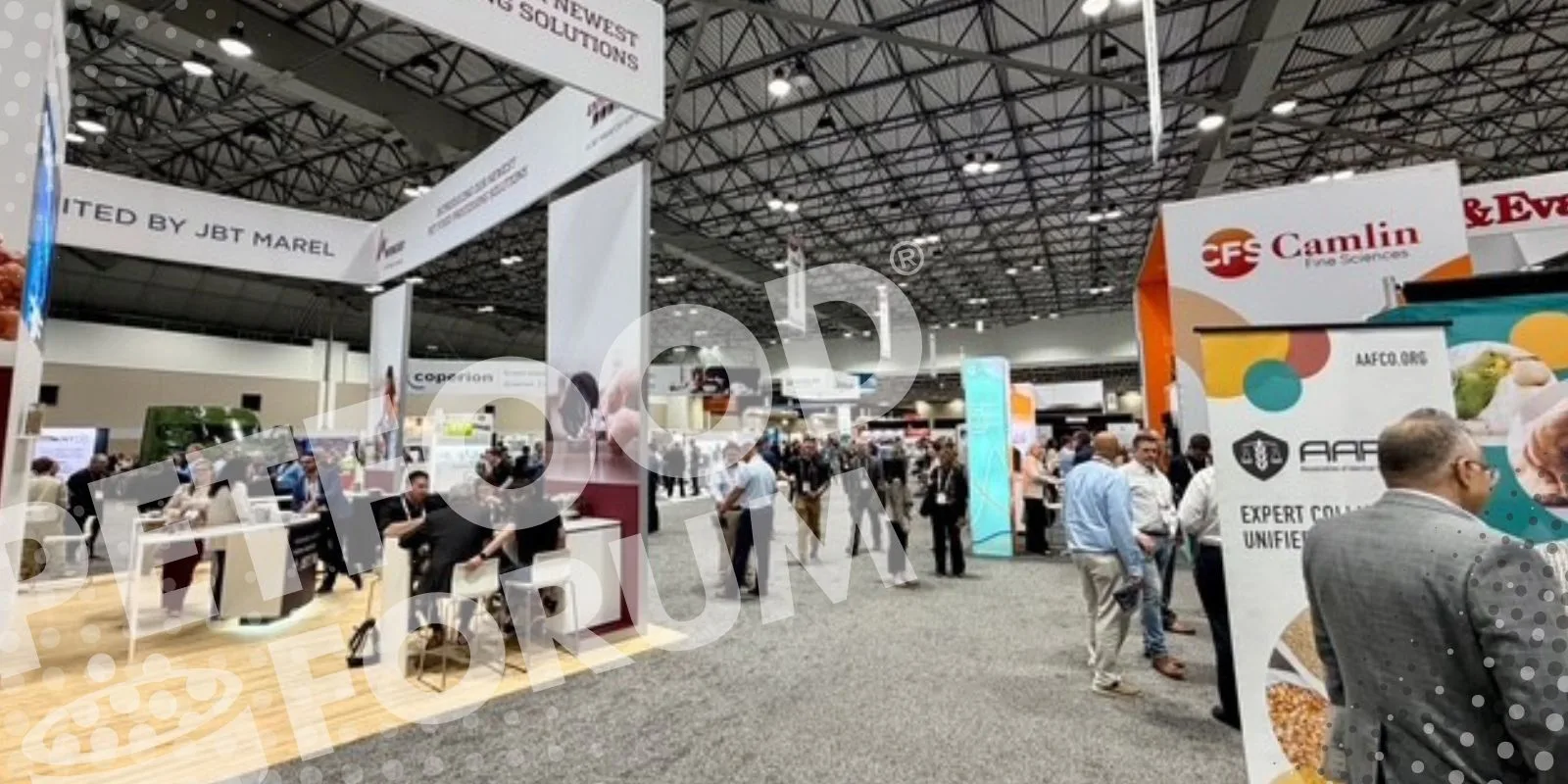
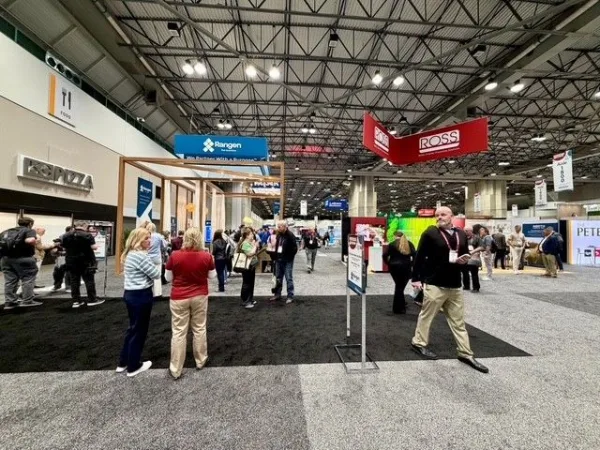
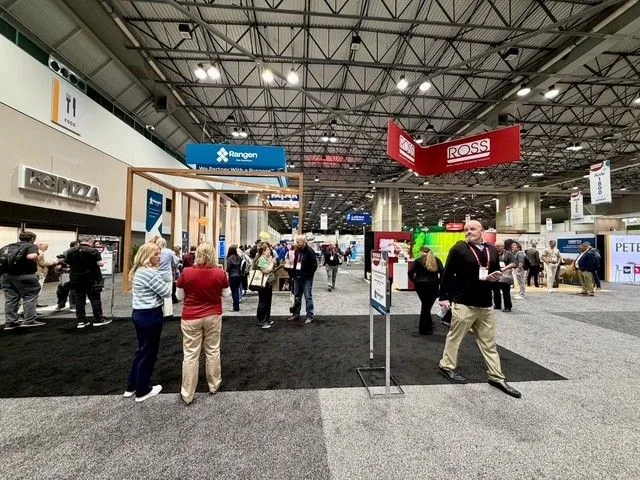
Dynamic Conveyor’s time at Petfood Forum 2026 in Kansas City underscored just how fast pet nutrition and pet food manufacturing are evolving—and how critical flexible, sanitary conveyor systems have become in keeping up with that change. Across conference sessions and the expo floor, we learned about industry trends and solidified the value of modular pet food conveyors that support sanitation, quality, safety and fast line changeovers.
 Why Pet Food Manufacturers Need Flexible Conveyor Systems
Petfood Forum 2026 brought together pet food manufacturers, ingredient suppliers, equipment OEMs and automation partners for three days of education and networking focused exclusively on pet food processing and packaging. As we attended educational sessions and walked the show floor, three themes consistently emerged: Global supply volatility, premiumization and humanization of pet food, and the growing role of data and AI in optimizing production lines.
For pet food processors, frequent product and packaging changes, new formulations and added regulatory requirements are challenges—all which modular conveyor solutions can support. Pet food conveyor systems that can be quickly sanitized, reconfigured, and integrated with existing equipment will help plants adapt without disruptive process changes or rebuilds.
State of the Industry: Trade, Supply Chain and Production Line Flexibility
The Pet Food Institute’s “state of the industry” session highlighted that the U.S. remains a net exporter of pet food, with Canada, Mexico and China among the largest export markets and roughly half of exports going to our North American neighbors. At the same time, ongoing geopolitical tensions, inflation, and currency swings are creating persistent volatility for both businesses and consumers, reinforcing the need for agile pet food processing lines that can respond to ingredient and demand shifts.
Current U.S. trade policy is reshaping supply chains through top-down initiatives to expand domestic manufacturing, including tariffs and investigations on critical ingredients such as vitamins, amino acids and minerals. This has introduced uncertainty, higher costs and market access challenges, from supply chain instability and port congestion to formulation changes and regulatory differences—even as mostly domestic sourcing remains a strength for many U.S. pet food manufacturers.
From a conveying standpoint, this environment favors modular pet food conveyor systems that can accommodate new kibble shapes and new packaging formats without long engineering cycles. Conveyor solutions that allow plants to add length, change elevation or re-route product with modular components help manufacturers maintain throughput as formulations and sourcing evolve.
Consumer Trends: Premium Pet Food and Clean Processing
 Sessions and the opening keynote made it clear that pets’ status in the home continues to rise, driving premiumization and human-food-level expectations across pet food categories. Pet ownership is growing globally, and pet parents are looking for evidence-backed quality, safety and nutritional benefits rather than vague marketing claims—particularly around how their pet food is processed and handled.
Speakers highlighted several demand pillars that impact how pet food processors and supporting conveyor systems must perform:
- Clean processing: Consumers accept processing for convenience but want “justified” processing that preserves nutrients, with traceable chain of custody from farm to bowl and transparent handling steps.
- Fresh, air-dried and freeze-dried formats: Growth in fresh, air-dried, freeze-dried and jerky-style products require gentle handling conveyors that minimize breakage, while maintaining product appearance and integrity.
- Food safety and hygiene: As standards for pet food move closer to human food, sanitary conveyor design, toolless disassembly and easy washdown are non-negotiable in pet food manufacturing equipment.
For Dynamic Conveyor, this trend reinforces the value of modular sanitary conveyors and hygienic pet food conveyor solutions that deliver:
- Fast, toolless disassembly for thorough cleaning and reduced sanitation downtime
- FDA and FSMA-compliant materials and designs for raw and ready-to-eat pet food
- Gentle handling to reduce product damage on kibble, treats and premium inclusions
AI, Data and Smarter Pet Food Conveyors
In a Best Mix session focused on AI, the presenter walked through a familiar challenge in pet food manufacturing: formulations that look perfect on paper but behave inconsistently on the line because operators cannot see or act on integrated data across formulation, production and quality.
With data siloed, each operator makes different “best guess” adjustments at the extruder, dryer or packaging area, and quality teams often discover issues only after texture or performance problems have already occurred.
AI-driven tools can learn patterns in historical and live process data and provide real-time recommendations to operators through dashboards, essentially becoming a predictive “co-pilot” that helps standardize decisions and tighten process windows. When embraced, these systems can reduce rework, energy use and labor, while delivering more consistent product quality—often outperforming individual operator intuition while still relying on human expertise.
For conveying, this points toward smarter pet food conveying systems that:
- Integrate with sensors and controls at key points on pet food conveyors (e.g., belt load, speed, temperature zones around dryers, metal detection)
- Allow modular conveyor layouts to be adjusted as analytics reveal new bottlenecks or optimization opportunities
Dynamic Conveyor’s modular conveyor solutions are well positioned for this evolution because they can be instrumented and reconfigured as plants add AI, robotics and other automation to their pet food processing lines.
Partnerships, Total Cost and “Fit for Purpose” Conveyor Design
A session on supply chain partnerships emphasized that strong supplier relationships are built on clear, aligned KPIs and active management rather than static scorecards. Pet food manufacturers were encouraged to define and commit to metrics such as on-time delivery and quality, ensure those scorecards drive real conversations and change, and think in terms of total cost instead of unit price alone—factoring in downtime, variability, sanitation time and the cost of not making a change.
In a separate talk, Haskell’s industry expert framed “fit for purpose” equipment and facility design as the nexus of consistency and innovation in pet food, emphasizing that nutrition, process and food science must be considered together because process has a direct impact on product quality. With the future of pet food leaning toward air-dried, freeze-dried, fresh and jerky-style formats, flexibility in facility layout, contamination control and dust-free operation were highlighted as core design requirements for conveying systems.
From our perspective, that is exactly where modular pet food conveyor systems add value:
- Sanitary pet food conveyors that support hygienic zoning and easy cleaning between allergen- or protein-specific runs
- Modular conveyor layouts that can be re-angled, extended or re-routed as new lines or SKUs are introduced
- Integrated elevation, accumulation and transfer conveyors designed to reduce product damage and cross-contamination while maximizing uptime
As we continue conversations sparked at Petfood Forum 2026, we’re excited to explore partnerships where pet food conveyor solutions play a central role in delivering safer, higher-quality and more personalized nutrition for pets around the world.
If you work in a pet food manufacturing plant and are ready to enhance your operation Contact Us to get started.




- Production Floor Supervisor – Full Time - September 15, 2026
- DynaCon: The Modular Conveyor Line That Started It All - September 15, 2026
- Inside Sales Representative - September 14, 2026